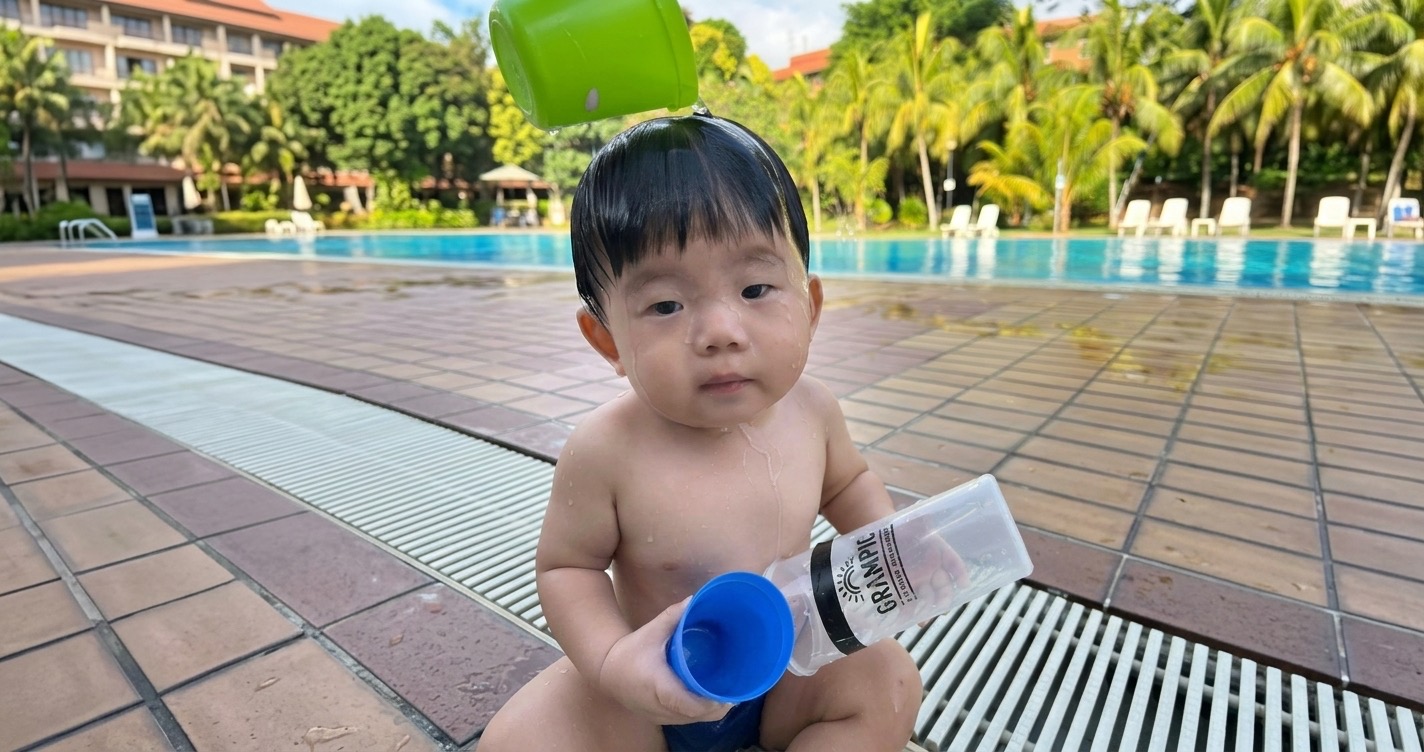
“When should I have my child begin swimming lessons?” It’s the question parents ask us most often — and the honest answer is that there isn’t a special age.
Every child is different. Some paddle in happily from their very first dip; others cling to mum or dad for the first few sessions before they relax. Both are completely normal — readiness isn’t a birthday, it’s a mix of temperament, exposure and trust.
At Swim Movement, we don’t think learning to swim is about hitting a particular stroke by a certain age. We see it as a journey. Our aim is for children to first become at ease in the water, then gradually build the skills, confidence and awareness they need to swim safely.
So, at what age can children start?
Children can be introduced to water from an early age, provided the experience suits their stage of development and they’re always closely supervised by a responsible adult. What that looks like changes a lot as they grow — a session for a 1-year-old and a lesson for a 5-year-old share almost nothing in common, and that’s by design.
Tap through the stages below to see how our approach shifts as your child grows:
Getting used to water, gently
Hardly any emphasis on strokes or kicking drills. The focus is wetting the face without fuss, simple floats supported by a parent or coach, and building trust with the water itself. A positive first experience matters far more than any skill at this stage.
Play to Learn
Our Play to Learn programme meets toddlers where they are — imaginative, play-based activities that build water confidence and motor coordination, without ever feeling like “a lesson”.
Learn to Swim, Levels 1–6
Once a child is comfortable and coordinated enough, they move into our structured, progressive Learn to Swim curriculum — from water safety fundamentals through to full stroke development.
It’s never too late to begin
Older children and even adults who missed out earlier start from the same principle — comfort and safety before technique. A short assessment places them at the right level, so there’s no wasted time and no awkward mismatch with much younger beginners.
What an early lesson actually looks like
Swimming lessons for very young children look quite different from what most parents picture when they hear “swimming lesson”. In the early stages, there’s little to no focus on freestyle, breaststroke or kicking drills.
Instead, the aim is simply to get the child used to water — wetting their face, learning how to move in it, practising simple floats, and building a trust relationship with both the instructor and their parent or caregiver.
What matters most is that the child has a positive experience of water.
Survival first, strokes later
At Swim Movement, our approach puts survival first. We want children to develop real skills and awareness in the water — not just learn to perform a few strokes on command.
- Comfort with the face and ears underwater
- Controlled floating, on the front and back
- Understanding how to move safely toward the pool edge
- Calm breathing, even when startled or splashed
- A genuine trust in their instructor and their own ability
A child who is confident and knows what to do in the water is in a far better position to learn correct swimming technique later on. Skipping straight to strokes, before that foundation is there, tends to build anxiety instead of ability.
Ready when you are
There’s no “right” age to begin — only the right starting point for your child. Explore our Learn to Swim programmes, from Play to Learn toddlers through to Level 6, or message us and we’ll help you figure out where to start.
Not sure where to start?
Tell us your child’s age and we’ll recommend the right first step — no pressure, no obligation.