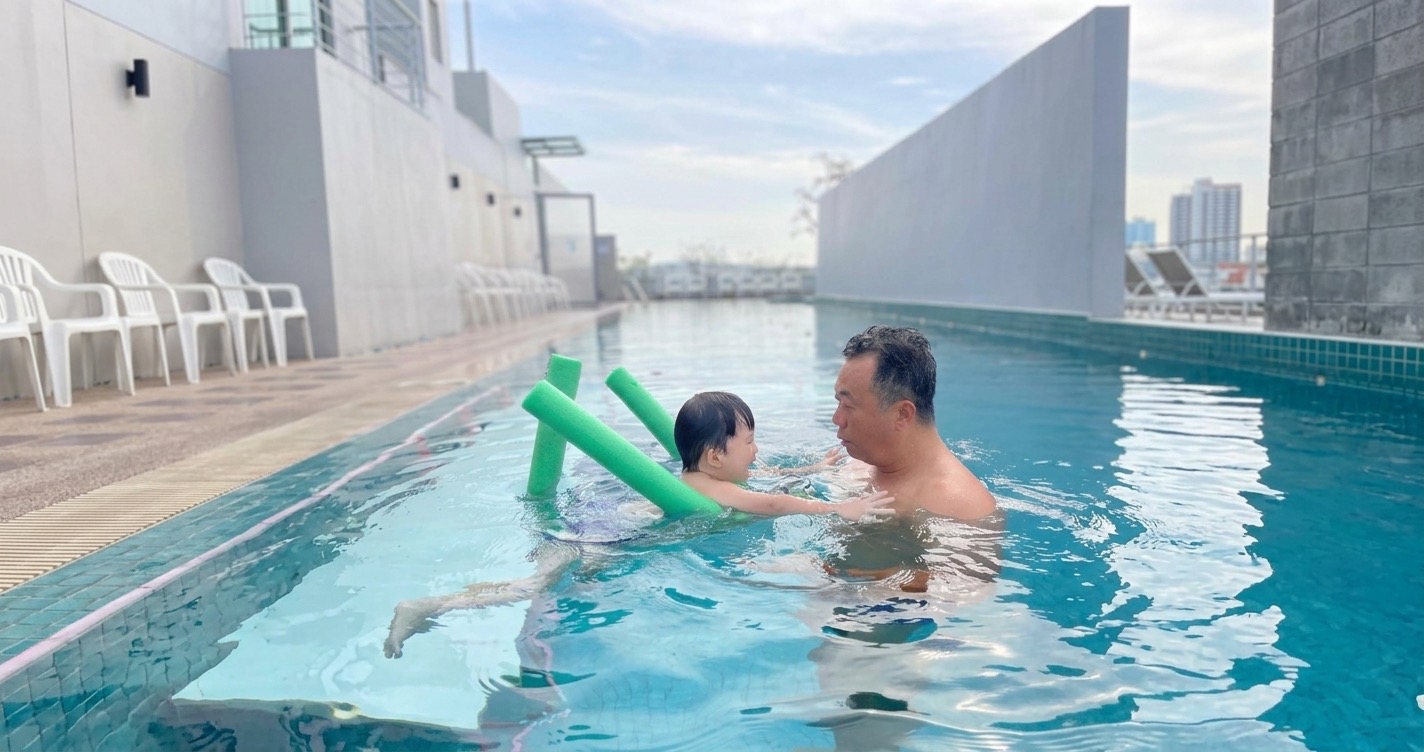
It’s not uncommon for children to cry when brought close to the pool, to refuse to get in, or to become upset the moment water touches their face. We see this often — and it doesn’t mean anything is wrong.
As a parent, it can be hard to know what to do. Should you encourage them to be braver? Ask them to try again? Leave lessons for another time altogether?
Our advice is simple: don’t rush them. A fear of water doesn’t mean your child will always be afraid of swimming — it usually just means they need more time to understand the water and feel safe in it.
Three steps to try at home
Tap each step to see how it works. Go at your child’s pace — there’s no timeline to keep to.
Let them sit at the pool’s edge and simply dip their feet in. No pressure to go further — familiarity starts with the smallest, safest possible contact with water.
Hold their hands and walk them into the shallow end together. Your steady presence matters more than how far or fast you go.
A water toy is one of the easiest ways for a child to become acquainted with water. Splashing, pouring, moving their hands through the water or practising gentle bubbles — all count, all within their comfort level and with close supervision.
What helps — and what doesn’t
- Let them set the pace — a few minutes of comfort beats a forced full lesson.
- Stay close, stay calm — children pick up on a parent’s or coach’s energy fast.
- Celebrate small wins: a wet foot, a splash, a giggle all count.
- Repeat the same gentle routine each visit, so the pool starts to feel familiar.
- Don’t force them underwater or suddenly let go — it rarely builds confidence, and can do the opposite.
- Don’t compare them to other children, siblings included.
- Don’t treat one bad session as a sign they “can’t” — fear that isn’t addressed gently can turn into a lasting association between the pool and distress.
The aim isn’t to make water exciting overnight. It’s to make it familiar — one visit at a time.
Give it time
If your child is afraid of water today, that doesn’t mean they’ll be afraid of it forever. Most children who start this way go on to enjoy the water just as much as anyone — they simply needed a gentler on-ramp.
Give them time. And most importantly, give them a positive experience with water — that’s the foundation everything else is built on.
A coach who knows how to wait
Some children need six sessions before they’re comfortable putting their face in — and that’s completely fine. Explore our Learn to Swim programmes, or message us and tell us a little about your child.
Every child, at their own pace
Tell us about your child and we’ll match them with a coach who knows how to build trust first.